

Working with your dog is a lifestyle
Connie has owned German Shepherds since 1984 and has been part of Dansk Politihundeforening since 1998. With Møller’s Natan, she has competed in the Danish Championships five times. Here, she talks about the PH programme, the training community and the moments when a dog’s nose work makes a difference in everyday life.
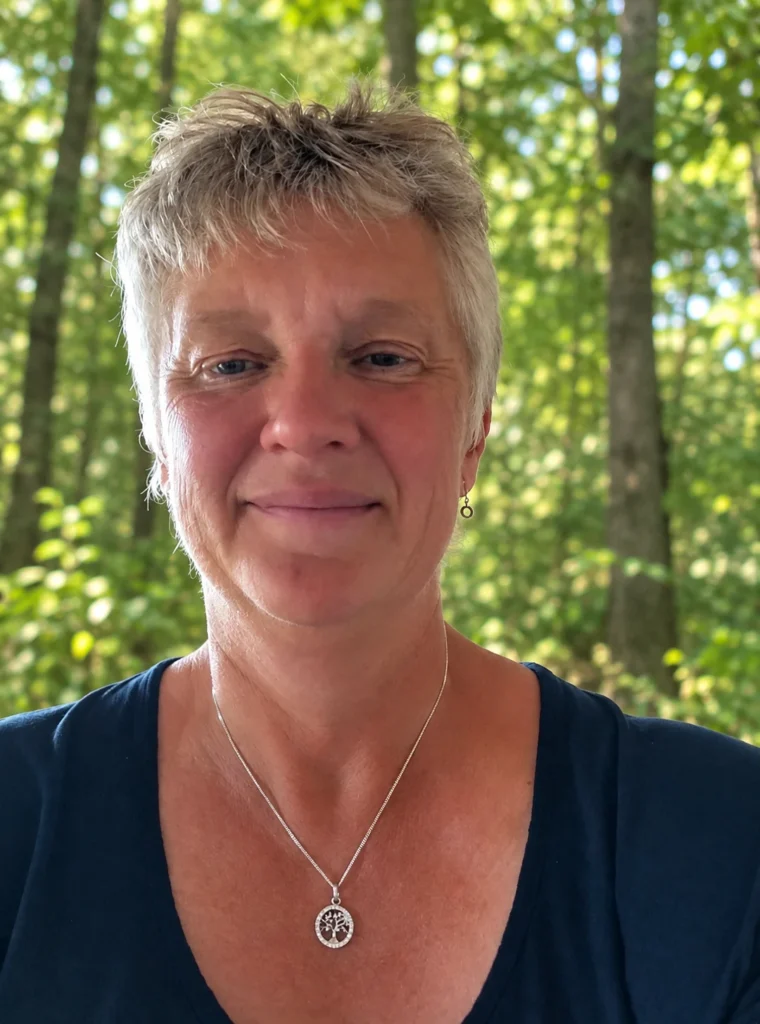
“I still learn new things every time I attend competitions and training sessions with good training partners.”
What is PH?
PH stands for Dansk Politihundeforening. Both police dog handlers with service dogs and civilian handlers take part here in a dog sport based on practical police dog work. Police patrol dogs belong to Section I, while civilian dogs belong to Section II.
The competition programme comprises 12 exercises. It ranges from obedience to tracking, searching and working with decoys who play the roles specified in the tasks.
Obedience: Off-lead heelwork, retrieving, barking on command, jumping, down stay and off-lead work beside a bicycle.
Search and tracking: Crime scene, tracking and area search. Among other things, the dog must find objects, follow an unfamiliar track and locate people in the terrain.
Decoy work: Arrest exercise, also known as the four-minute stop, courage in the face of blows and calling off a stop. This includes stopping and guarding decoys, as well as control and cooperation with the handler.
The classification is the gateway to competitions
For civilian dogs, classification is the gateway to the competition programme. The dog and handler must demonstrate to a classifier that they can complete 10 exercises. The test includes, among other things, lead walking, off-lead heelwork, retrieving, barking on command, jumping and down stay, as well as tracking, area search and two stopping exercises with a decoy.
At least 95 out of a possible 110 points must be achieved. In addition, there are separate requirements for the results in the individual exercises. Once the assessment has been passed, the dog-and-handler team can enter the young dog class.
From young dog to winner class
Young dog class: This is where the basic skills in the competition programme are brought together. The exercises include a 10 × 10 metre crime scene with four objects and a track of approximately 300 metres with two objects.
Patrol class: The exercises become more demanding, the tracks longer and the objects smaller. Here, competitors can qualify for the Danish Championships, where 16 dog-and-handler teams take part in the class.
Criminal class: The difficulty increases again, and several exercises can be combined. There are 10 places in the class at the Danish Championships.
Winner class: This is where the highest demands are placed on completing the exercises. The objects can be very small, and combined exercises challenge both dog and handler. There are also 10 places at the Danish Championships.
See the programmes and regulations at the Danish Police Dog Association
GET STARTED AND DEVELOP YOUR TRAINING
How to get started with PH
The Danish Police Dog Association is divided into six regions, with local associations throughout Denmark. Connie recommends finding your local association and getting in touch to learn about the opportunities for training with your dog.
Find a local association at the Danish Police Dog Association
How Connie keeps her training going
“PH training is a way of life. I joined in 1998, and I still learn new things every time I come to training or a competition with good training partners.
As civilians, we play cops and robbers a little when we train. No two criminals think alike, so the tasks are not always the same either. We have a set of rules to judge by, but the exercises can be linked together and must still be judged individually. The order often depends on the number we draw in the morning.
I train about four times a week. Sometimes it takes one or two hours; other times, a whole day. Thursdays, Fridays, Saturdays and Sundays are often spent training the dogs. On the other days, the dog is allowed simply to be a dog and relax.”
The dog must also think independently
For Connie, the variety is an important part of the joy of PH. The dog must be able to solve tasks independently, and the handler must be able to think quickly and find solutions. They do not know the exact assignment until they are at the station.
“Perhaps we are told that someone has been seen walking around a marked area and may have left some belongings behind. We have now been called in as dog handlers and must help find them. As civilians, this brings us close to a practical police-dog task.”
““PH works really well for me because I will never be fully trained in this programme.”
The 3 quick questions with Connie
1 What do you like most about PH
“Once the basic training is in place, it is great to be able to work with your training partners. They lay trails and crime scenes, so I do not know where the objects are or where the trail leads.
It may pass through a hedge, cross a road or change surface. The objects might be a lolly stick, a key, a hearing aid, glasses, a wallet or something completely different.
In area searches, the dog can find people who are standing, sitting or lying down. In the higher classes, the role-players may also be moving. Objects may also be lying in the woods, such as a jacket, an umbrella or a cardboard box. The variety makes the training exciting.”
2 What has been your best experience
“There have been many great experiences over the years. One of them is when the phone rings and someone says they lost their hearing aid while trimming the hedge and asks whether my dog can find it. We are happy to give it a try, and when we succeed, it feels absolutely fantastic.
I also remember a winter Saturday in the light of the full moon, when someone had lost his car key on a forest road. He had stumbled and searched thoroughly himself without finding it. In the end, he had to walk home to get the spare key.
The dog was set to work on the forest road, quickly picked up the trail and lay down after a few hundred metres to indicate the keys. It is an incredibly satisfying feeling to drive home with. That is when you know the training works.”
3 What keeps you going
“It’s the experiences, the teamwork and the joy of seeing that the many hours of training can be put to good use. The competitions throughout the year also mean a lot, and the highlight of the year is qualifying for the Danish Championships and taking part as a dog handler.
I’m a happy and proud dog handler who has taken part in the Danish Championships several times. It’s an achievement in itself, and I’m still passionate about Dansk Politihundeforening.”
“That’s when you know your training works. It’s the reward for many hours of training.”
About Connie
Connie comes from Southern Jutland and has owned German Shepherds since 1984. She started at Schæferhundeklubben, Branch 69 in Skærbæk, where she was also a trainer for obedience classes. In 1998, she switched to Dansk Politihundeforening. Today, she is chair of Tønder PH, as well as an instructor, decoy, judge and dog handler.
Her dog, Møller’s Natan, is 10½ years old. Together, they have taken part in the Danish Championships five times across three classes.
| Year | Danish Championship class |
| 2019 | Patrol class |
| 2020 | Criminal class |
| 2023 | Winners’ class |
| 2025 | Winners’ class |
| 2026 | Winners’ class |
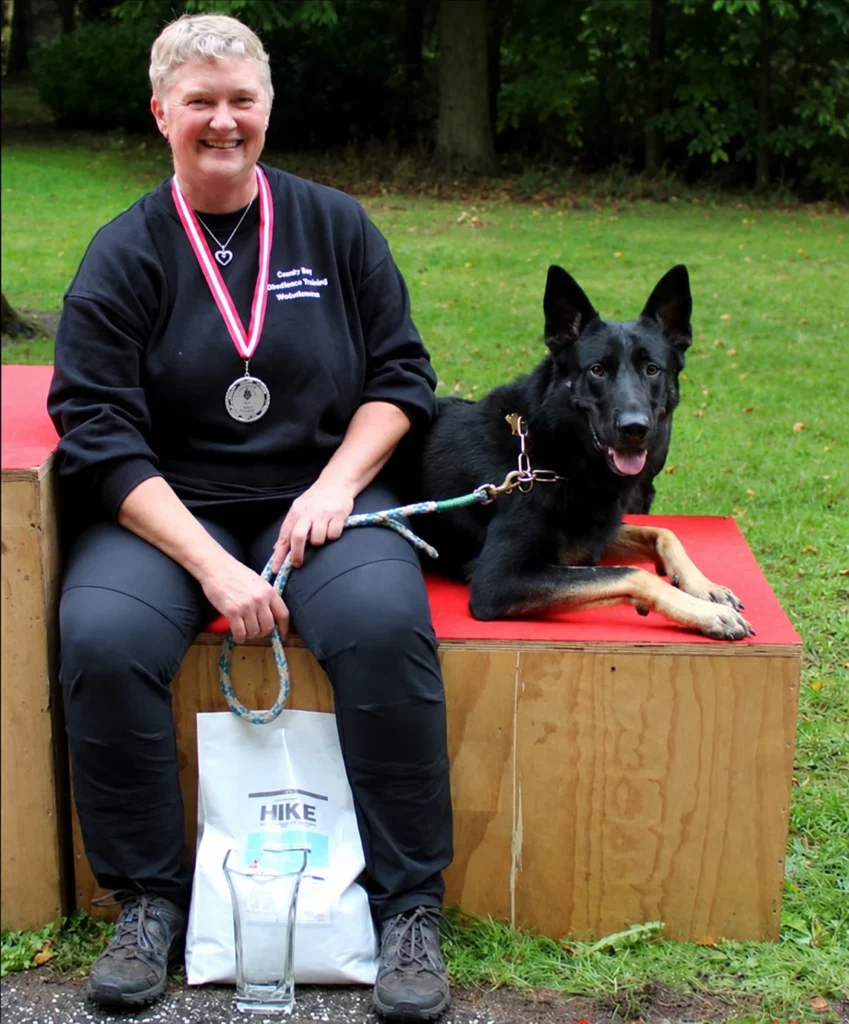
Why Connie chooses DOGSOME
“DOGSOME manages to make clothing that fits well in both shape and form. It’s hard-wearing, and there are pockets in all the right places. Thought has also gone into the size of the pockets. I can’t recommend it highly enough. Give it a try!”